When homeowners tell us a room "just doesn't feel right", they usually assume the answer involves new furniture, a bigger budget, or knocking something down. In our experience the cause is almost always simpler than that. A sofa pushed against the wrong wall. A single ceiling light doing the work of six. A colour that fights the daylight instead of welcoming it. None of these problems require a renovation to solve — they require attention, and a little patience.
This guide collects the changes we make most often when we work on interiors, along with the suggestions we usually talk clients out of. It is written for real households with real clutter, pets, children and hobbies, because a home that only looks good when nobody is in it has not really been designed at all.
Begin with how the room is actually used
Before choosing a paint colour or moving a single chair, stand in the doorway of the room and watch what happens over the course of an ordinary week. Where do people sit without thinking? Which corner collects bags, coats or unopened post? Which seat has nobody in it because it faces away from the conversation? These observations are more valuable than any style quiz, and they cost nothing to gather.
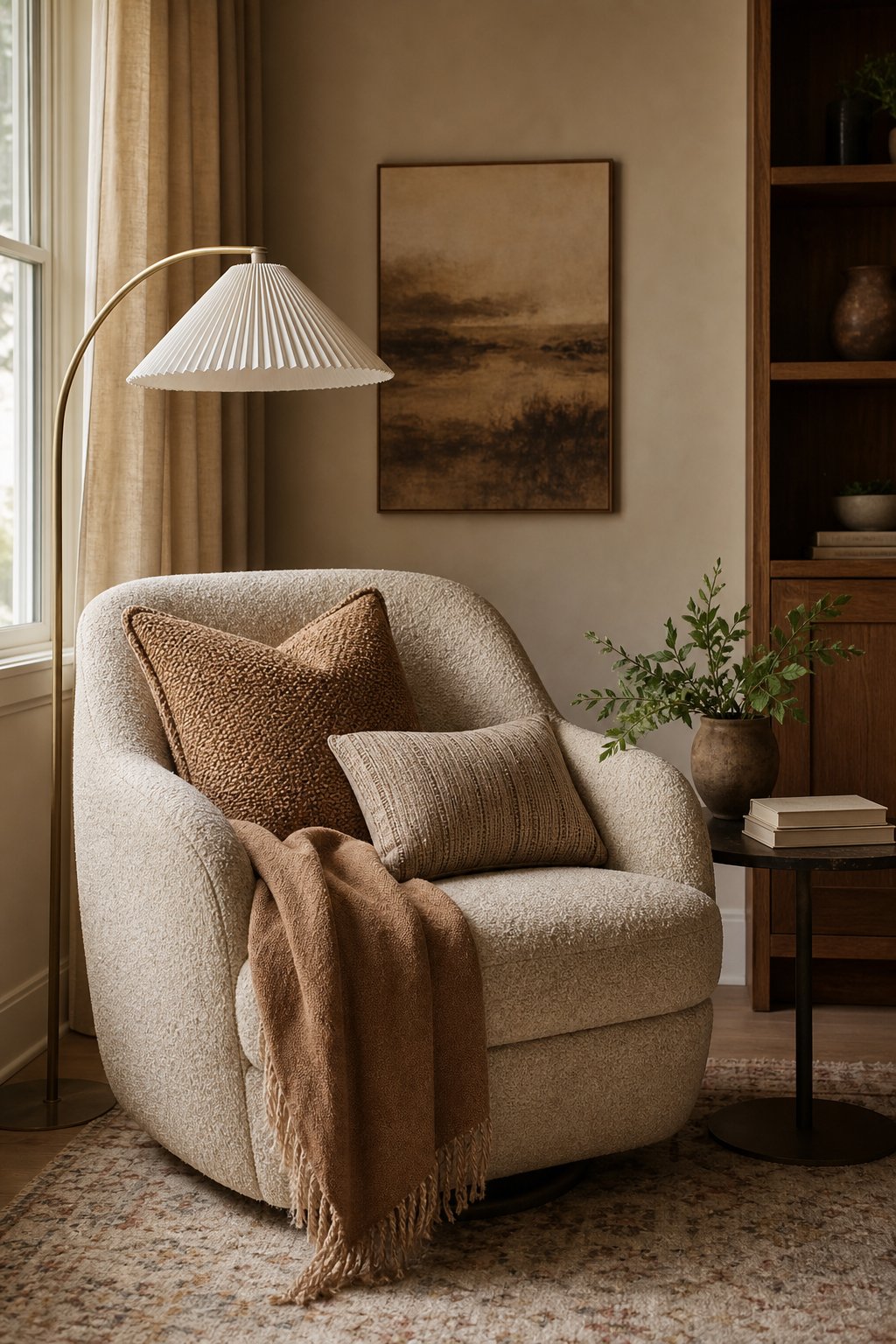
We ask clients to note the three most common activities in a room and where each of them lands. If homework happens at the dining table, the lighting and storage must serve that before it serves an imagined dinner party. If a corner is where everyone reads, then it deserves a lamp, a small table and a chair that has genuinely been chosen for comfort rather than appearance.
Lighting does more than any other single change
If you change only one thing, change the lighting. A single bright ceiling fixture flattens a room and makes everything feel clinical, while three or four smaller, softer sources create depth, highlight textures and make the same space feel twice as generous in the evening. Floor lamps, table lamps, wall sconces and a dimmable overhead all play different roles, and their warmth matters as much as their brightness.
Pay attention to the corners. A lamp placed where two walls meet lifts the whole room because it stops the space from falling away into shadow. Under-shelf lighting in a kitchen or a strip along a bookshelf does the same work at eye level, and these are inexpensive additions that homeowners notice immediately.
Let the layout follow your feet, not the wall
Furniture does not need to line the perimeter of a room. Pulling a sofa forward, even by a short distance, creates a walkway behind it and makes the seating area read as an intentional room within the room. Anchoring that grouping on a rug ties it together and quietly signals where the space begins and ends.
Watch for the paths people take and keep them clear. A table that requires a sideways step every time you pass will always feel like clutter, no matter how beautiful it is. Where a room is long and narrow, splitting it into two zones — a seating area and a work or reading corner — usually solves the awkwardness better than any single large piece of furniture could.
A room feels finished when every object in it has a reason to be there — not when every wall has something on it.
Texture and colour, used with restraint
Warmth comes from texture more than from colour alone. Linen, wool, rattan, timber, ceramic and matte finishes all absorb and soften light, while too many glossy surfaces make a space feel echoey. Mixing a few of these materials in a single room — a woven basket beside a linen sofa on a timber floor — creates the layered feel most people are chasing when they say a room looks "styled".
With colour, pick a base that works with your daylight and then let two or three tones repeat across the room in different forms. Repetition is what makes a scheme look deliberate. A deep green cushion that echoes a green ceramic and a green book spine will read as a choice rather than an accident, and it means you can change accessories over time without repainting anything.
Storage that hides, display that speaks
Clutter is not a character flaw; it is usually a storage problem wearing a disguise. Give everyday items a home that is faster to use than the floor is, and the room will stay tidy on its own. Baskets, lidded benches, a console with drawers and a shelf at the right height for children all reduce the daily friction that makes a home feel out of control.
Then choose deliberately what stays visible. A short shelf of books, plants and objects with a story will hold a room together far better than surfaces crowded with everything at once. Rotating what is out — a few pieces away, a few brought forward — refreshes a space without a single purchase.
Finishing details, and knowing when to stop
Curtains hung higher and wider than the window make ceilings look taller and walls more generous. Mirrors placed opposite a light source double the daylight. Rugs large enough to sit under the front legs of the furniture prevent a room from looking like it is balancing on stilts. These details are small, cheap and quietly transformative.
Let the room rest before adding more. Live with your changes for a few weeks and notice what bothers you and what you have stopped seeing entirely. Most homes need fewer purchases than their owners expect, and the best interiors we visit are the ones where everything present is genuinely used. If you would like help turning these ideas into a plan, our Home Decor and Interior service starts with a conversation rather than a catalogue.
A simple order of work
- Observe how the room is really used for one week.
- Fix the lighting before buying anything large.
- Re-arrange the layout and test the walkways.
- Add texture through soft furnishings and natural materials.
- Solve storage for the items that always end up on the floor.
- Finish with curtains, mirrors and one shelf of meaningful objects.