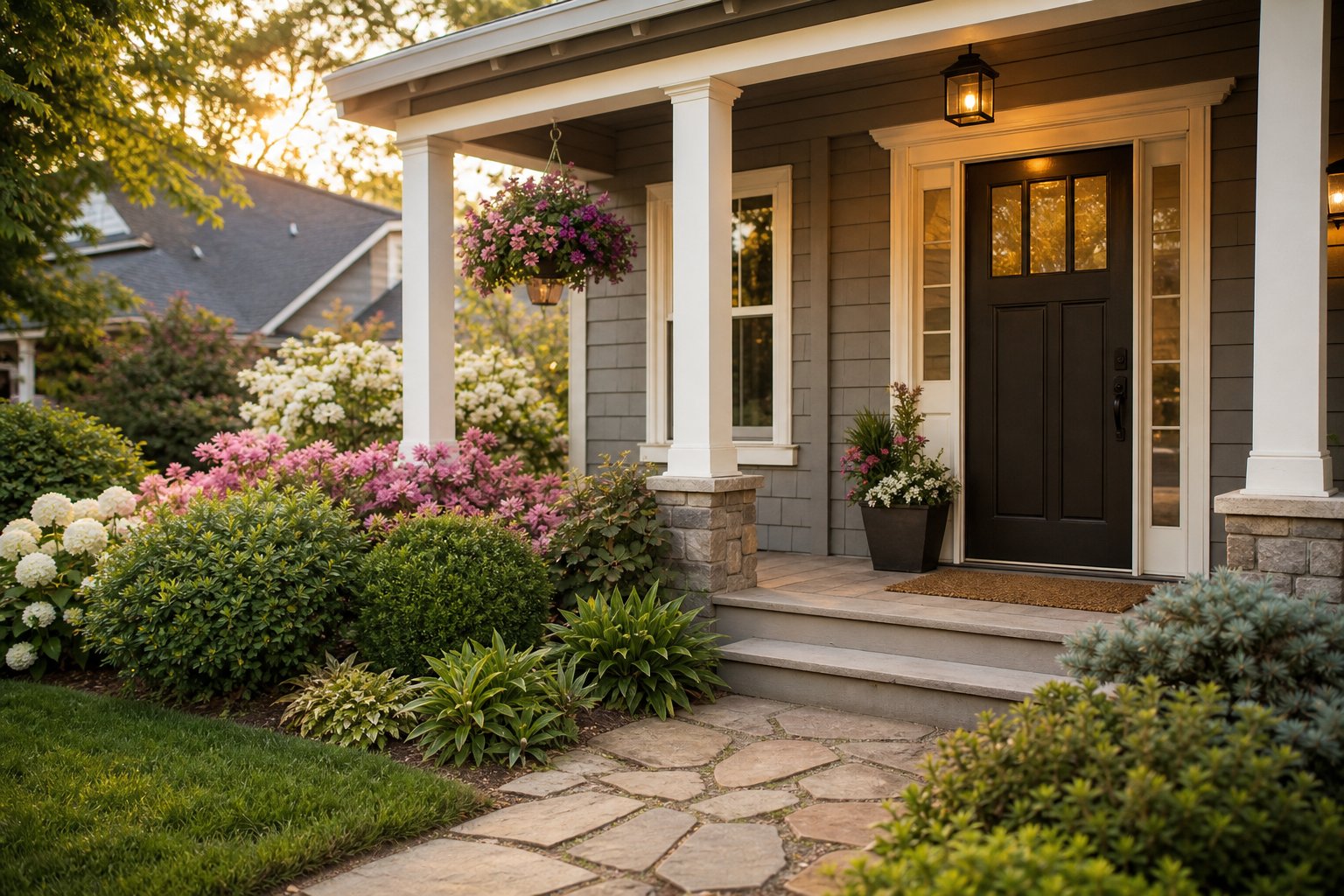
A home makes its first impression from the pavement, long before anyone steps inside. That impression is not created by a single dramatic gesture — a fountain, a grand door, a perfect lawn. It comes from a dozen small signals that someone is paying attention: steps that are swept, a door that closes squarely, a hedge with an edge, a pathway with no weeds pushing through the joints.
The good news is that this kind of care is cumulative and inexpensive. It also protects the building. Water that cannot drain, soil pressed against siding, or a shrub blocking a vent will all cause damage quietly and expensively in the end. What follows is the seasonal rhythm our exterior crews work to, adapted for homeowners who would rather spend their weekends relaxing than renovating.
Start at the front door and work outward
The door is the most looked-at element of any home, and the easiest to improve. A clean, well-painted door with hardware that turns smoothly changes how a property reads. Check the threshold for gaps, the frame for soft timber, and the hinges for sagging. Lighting either side of the entrance, even a single, warm, well-placed fixture, makes the approach feel welcoming after dark and safer for anyone arriving on foot.
From there, work outward along the route a visitor takes: the step, the path, the gate and the boundary. Sweeping, weeding the joints and clearing leaves take very little time but they change how polished a front garden looks. If a path is uneven enough that someone might trip, treat that as a priority rather than a cosmetic detail.
Paint, siding and the early warning signs
Paint is a protective layer before it is a decorative one. When it blisters, peels or chalks, the material underneath is exposed to weather, which is why small touch-ups are worth doing promptly rather than waiting for a full repaint. Look closely at south and west-facing walls, which take the harshest sun, and at the lower sections near the ground where moisture lingers.
On siding, run your eye along the wall as if you were reading a line of text. You are looking for anything that breaks the pattern: a lifted edge, a darkened patch, gaps where caulk has shrunk, or a soft spot that gives when pressed gently. Note the location, take a photograph and ask someone to look at it early. Almost every exterior repair we carry out would have cost less if it had been raised a season sooner.
Water: the most important thing to manage
Where water goes decides how long a home lasts. Gutters that overflow in a storm dump water against the foundation; downpipes that end beside the wall do the same. Twice a year, clear gutters of leaves and grit, check that downpipes are firmly attached and confirm that water is being carried well away from the building.
Watch the ground for clues too. Soggy patches after rain, soil that has pulled away from the wall, or a garden bed mounded high against the siding are all messages. Ideally, soil should sit a little below the level of your lowest siding course, and surfaces should slope gently away from the house rather than towards it.
Curb appeal is really just maintenance you can see. Look after what the weather touches, and the appearance takes care of itself.
Planting that suits the site you have
The most common gardening mistake is buying plants because they looked lovely at the nursery, without checking how much sun, wind and space the chosen spot offers. We can save homeowners a great deal of disappointment by matching plants to conditions: shade tolerant varieties under eaves and beside north-facing walls, sturdy wind-tolerant species at exposed corners, and drought-tolerant planting where rain rarely reaches.
Keep a clear perimeter around the building. Shrubs and trees planted close to the wall trap damp against masonry, obscure windows, and make exterior maintenance harder to do. A hedge with room to breathe looks intentional and trims far more easily. In beds, a simple layering of low structure, mid-height interest and one or two taller accents will hold its shape through most of the year with very little input.
A seasonal rhythm worth keeping
Exterior care is gentler when it is spread out. After winter, inspect for damage from freezing and storms, clear debris from drains, and check fences and gates for movement. Through the warmer months, keep paths clear, deadhead the flowering plants, and water deeply but less often so roots grow down rather than lingering at the surface.
As leaves fall, gutters and doors deserve another look, outdoor furniture should be cleaned and stored properly, and planting can go in while the soil is still warm. Before the coldest weather arrives, tidy the garden so nothing is left collapsed, protect what needs shelter, and confirm that outdoor lighting, alarms and sensors are all still working after a darker season of testing conditions.
Outdoor living, planned for real use
Decks, patios and porches only earn their space when they are genuinely comfortable. If yours is rarely used, consider what is missing: shade in the afternoon, a light that stays on rather than one that flicks off, a seat that is easy to carry out rather than a heavy bench against the wall. Small adjustments frequently turn a decorative patio into the family's favourite room.
Keep safety in mind alongside the comfort. Deck boards and railings should feel solid, steps should be visible, and outdoor kitchens or fire features need sensible clearance from anything that could catch. When you are ready, our Home Exterior and Garden service can handle the site work, while our Solar and Roofing Upgrade service looks after what is happening overhead.
Five checks you can do this week
- Walk the perimeter and photograph anything that has changed since last season.
- Clear gutters and confirm downpipes carry water away from the walls.
- Test exterior lighting, door hardware, gates and latches.
- Check that soil sits below the lowest siding and slopes away from the building.
- Trim anything touching the walls so air can move around the structure.